
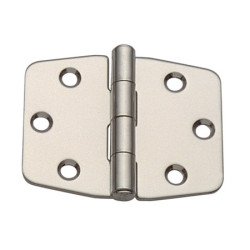
Though often overlooked, hinges are one of the most essential mechanical components in both everyday life and specialized industries. From the doors in your home to complex machinery and marine equipment, hinges serve the vital function of enabling controlled movement between two connected objects. Durable, versatile, and designed in countless configurations, hinges are the silent enablers of motion — providing flexibility, security, and longevity across a wide range of applications.
What Is a Hinge?
A hinge is a mechanical bearing that connects two solid objects, allowing a limited angle of rotation between them. Most commonly, hinges allow doors, lids, or panels to open and close smoothly along a fixed axis. The basic design includes two plates (also known as leaves) joined by a central pin, around which the plates rotate.
While the concept is simple, the diversity in hinge types, materials, and sizes is vast — each suited to specific functions and environments.
Common Types of Hinges
- Butt Hinges
These are the most widely used hinges in doors, cabinets, and windows. They consist of two identical leaves attached by a central pin. They’re commonly used in residential and commercial door installations. - Piano Hinges (Continuous Hinges)
Extending the full length of the door or panel, piano hinges provide strong, even support and are ideal for long panels, toolboxes, and heavy-duty lids. - Concealed Hinges (European Hinges)
Often used in modern cabinetry, these are hidden from view when the door is closed, offering a sleek, minimalist appearance while allowing for soft-close and adjustable features. - Spring Hinges
Fitted with a spring mechanism, these hinges automatically return the door to a closed position, making them ideal for commercial and fire-rated doors. - Heavy-Duty and Marine Hinges
Designed for strength and corrosion resistance, these are used in harsh environments such as boats, industrial machinery, and outdoor enclosures. Stainless steel or brass is typically used for marine-grade hinges.
Materials and Finishes
Hinges are made from a range of materials, each chosen for its specific strengths:
- Stainless Steel: Highly corrosion-resistant, ideal for marine and outdoor applications.
- Brass: Offers a classic look and excellent corrosion resistance, often used in decorative or antique-style hardware.
- Steel: Strong and durable, often used in industrial applications. Usually coated or plated to resist rust.
- Aluminum: Lightweight and corrosion-resistant, commonly used where weight is a concern.
Surface finishes can include brushed, polished, powder-coated, or plated options, depending on aesthetic and functional requirements.
Applications of Hinges
- Residential: Doors, cabinets, wardrobes, windows, gates.
- Commercial: Fire doors, security doors, office furniture.
- Industrial: Machinery enclosures, equipment panels.
- Marine: Hatches, lockers, engine covers.
- Automotive: Vehicle doors, trunks, and compartments.
Choosing the Right Hinge
Selecting the appropriate hinge involves considering:
- Load capacity: Heavier doors require stronger or more numerous hinges.
- Mounting style: Surface-mounted or concealed.
- Environmental exposure: Use rust-resistant materials for outdoor or marine settings.
- Range of motion: Some hinges open to 90°, others to 270° or more.
Conclusion
Though small in size, hinges play a crucial role in the function, safety, and aesthetics of doors, panels, and enclosures. With an incredible range of types and materials available, the right hinge can ensure smooth operation, enhance design, and extend the life of the structure it supports. Whether for home, industrial, or marine use, investing in quality hinges is essential for long-lasting performance.
